
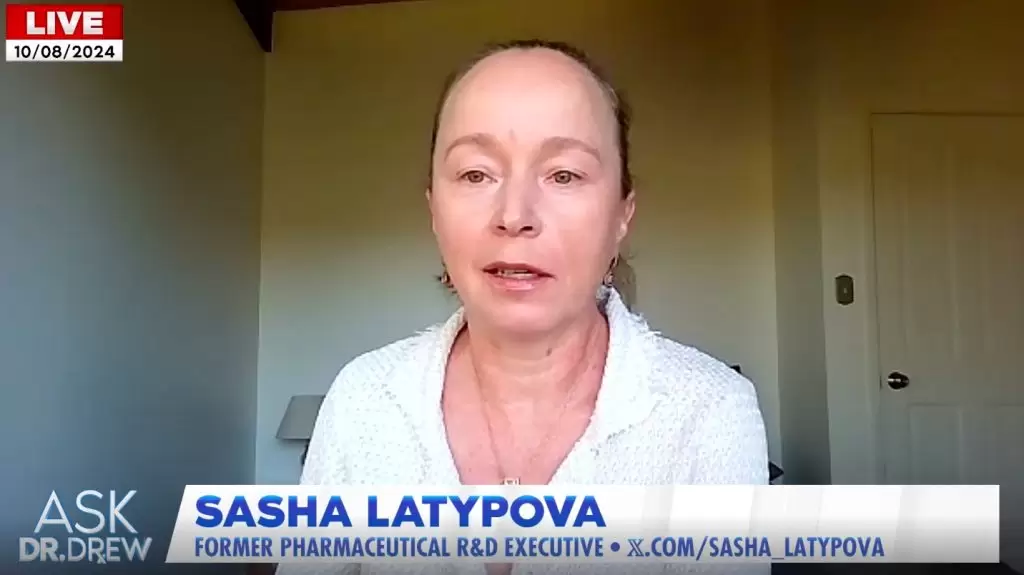
Sasha Latypova, a former pharmaceutical R&D executive and outspoken critic of COVID-19 measures, has uncovered a potential cause behind vaccine injuries, which could extend beyond just mRNA vaccines.
Her recent research delves into anaphylaxis, a condition that may explain the growing number of vaccine-related injuries reported in recent years.
Latypova’s findings point to the work of Charles Richet, a Nobel Prize-winning physiologist and eugenicist who coined the term “anaphylaxis” in 1902.
Richet’s work on anaphylaxis has profound implications for understanding vaccine reactions. Anaphylaxis, often seen in severe allergic reactions, is a condition that can be triggered by proteins injected directly into the bloodstream. Richet’s early experiments showed that when certain proteins, including those found in food, are injected rather than ingested, they can cause severe allergic reactions. This has serious implications for vaccine safety.
Latypova’s post on her Substack “Due Diligence and Art,” dives deep into Richet’s work, revealing his findings about the second exposure to a toxin or protein, which often leads to the severe reactions of anaphylaxis. This reaction may take weeks or even years to manifest, making it harder to pinpoint the cause. Latypova emphasizes that the second dose of any vaccine, such as the COVID-19 vaccine, often follows the same principle, with the interval between the two doses typically set at 21 days.
Richet’s experiments with proteins found in food, like milk and wheat, highlighted the dangers of injecting proteins into the bloodstream. The body’s immune system can react violently to these foreign substances, triggering anaphylaxis. This phenomenon, once understood, can explain why some individuals experience severe allergic reactions to vaccines while others do not. The “second exposure” often results in life-threatening anaphylactic shock.
Latypova cites data from the Vaccine Adverse Event Reporting System (VAERS), which reveals a significant number of anaphylactic reactions linked to COVID-19 vaccines. More than 9,000 reports of anaphylaxis have been recorded following mRNA vaccinations, a figure that underscores the potential risks.
However, as Latypova points out, the problem extends beyond COVID-19 vaccines to other types of vaccines that introduce foreign proteins into the body.
Richet’s work also suggests that it is impossible to predict who will suffer from anaphylaxis. While healthcare providers argue that vaccines are “safe,” Richet’s findings imply otherwise.
According to Richet, vaccines cannot be universally safe because it is impossible to foresee who will react adversely to them. The immune system’s response to injected foreign proteins is unpredictable, and for some, the reaction can be fatal.
Latypova’s investigation into Richet’s research also led her to question the current state of medical science and vaccine policy. She draws a parallel between Richet’s work and the modern-day use of vaccines, noting that the principles of anaphylaxis he uncovered over 100 years ago remain highly relevant today.
In a later post, Latypova has also referenced an article from 2020 by Merinda Teller, MPH, PhD on gelatin, which is used as a stabilizer in many vaccines, as a key factor in anaphylactic reactions. Teller points to a troubling rise in allergies linked to red meat, which she suggests could be connected to gelatin-containing vaccines.
Research has shown that gelatin, particularly in vaccines such as the DTaP (Diphtheria, Tetanus, Pertussis), is a common trigger for allergic reactions, leading to anaphylaxis in susceptible individuals.
Teller argues that the surge in food allergies, including red meat allergies, coincides with the expanded vaccine schedule beginning in the early 1990s. This correlation, she suggests, raises concerns about the role vaccines play in the rise of these allergies. Her insights also draw attention to the possible connection between the use of bovine serum albumin (BSA) in vaccine production and the development of meat allergies.
In her discussions, including an appearance on Ask Dr. Drew, Latypova emphasized that the rise in vaccine-related injuries may not be coincidental. She critiques the broader vaccination agenda.