
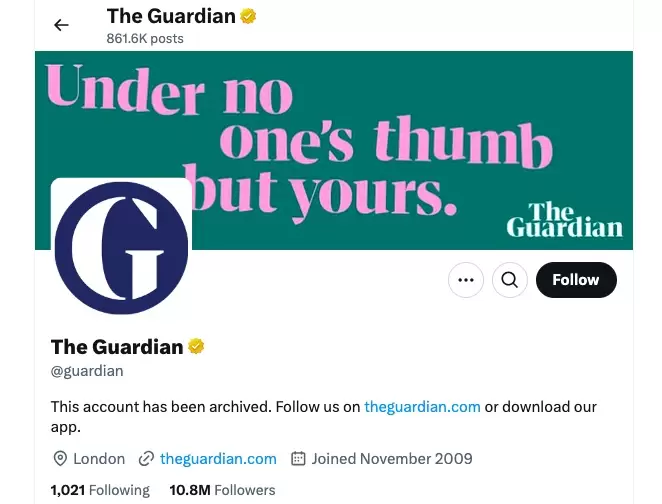
The Guardian has announced it will cease posting content on Elon Musk’s social media platform, X, citing concerns over the platform’s content and its impact on political discourse. The decision marks a significant moment in the ongoing decline of traditional media outlets’ presence on social media.
The UK-based newspaper explained its reasoning for suspending its official X accounts, citing the platform’s growing prevalence of “far-right conspiracy theories, racism, and disturbing content”. The Guardian’s announcement came as it noted the recent coverage of the 2024 US presidential election.
While the Guardian will no longer post on X, it clarified that readers can still share its articles on the platform. The newspaper’s decision also allows for occasional embedding of X posts in its live news coverage. However, individual journalists are still permitted to use the platform for newsgathering purposes, as long as they adhere to the Guardian’s social media guidelines.
This shift is part of a broader trend among legacy media organizations distancing themselves from X due to concerns about content moderation and platform policies under Musk’s ownership. The move follows similar actions by other major outlets, such as National Public Radio (NPR) and PBS, which suspended their accounts after X labeled them as “state-affiliated media.”
In response to the Guardian’s announcement, Texas Lindsay took to X, criticizing the organization’s decision. “The Guardian just announced they will no longer post on X because of ‘far-right conspiracy theories and racism,’” Lindsay posted, adding, “Simultaneously, they ask for donations & claim they are funded by readers—with no mention of the $10+ million they’ve received from Bill Gates.”
Kyle Becker, a journalist, also weighed in on the situation, highlighting the broader issue with legacy media. “The Guardian believes it should have the privilege to talk at citizens without anyone fact-checking its misleading statements or disagreeing with its biased narratives,” Becker wrote.
“Legacy propaganda outlets aren’t afraid of ‘misinformation.’ They are afraid of being ‘fact-checked’ by independent journalists. They are afraid of their narratives being exposed as deceptive by citizens who read their publications.”