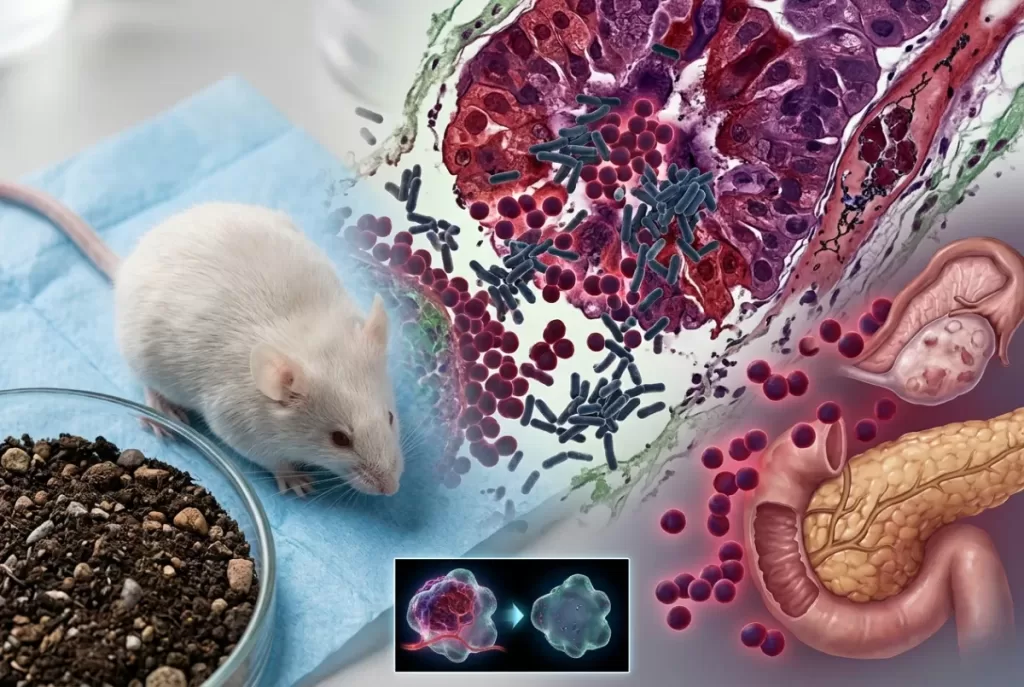
Epidemiologist Nicolas Hulscher, MPH, highlighted striking preclinical results showing a natural bacterial combination completely eliminated tumors in every treated mouse.
The findings, detailed in a peer-reviewed study, involved two intravenous doses and produced no observable systemic toxicity.
The Soil Bacteria Duo Behind the Results
The consortium pairs Proteus mirabilis (called A-gyo), a tumor-resident bacterium, with Rhodopseudomonas palustris (called UN-gyo), a photosynthetic soil bacterium commonly found in natural environments.
Together they form a self-regulating mixture known as AUN, used at a precise natural ratio of roughly 3:97 without any genetic engineering.
A-gyo acts as the primary tumor destroyer by invading cancer tissue, disrupting blood vessels, and triggering widespread cancer-cell death.
UN-gyo suppresses A-gyo’s potentially harmful activity while promoting its transformation into highly effective, tumor-penetrating forms.
Complete Tumor Elimination in Mouse Models
Hulscher reported that the combination achieved 100% complete tumor regression in models of human colorectal, ovarian, and pancreatic cancer.
Every single tumor in the treated groups disappeared after two intravenous doses, with substantially prolonged survival.
The same approach produced strong results in both immunocompetent and immunocompromised mice, including human tumor xenografts, indicating it does not rely on a functioning immune system.
Researchers observed no cytokine release syndrome or other signs of systemic toxicity at the tested therapeutic doses.
How the Bacteria Target Tumors
Once inside the tumor microenvironment, the bacteria trigger selective clotting (thrombosis) and collapse of tumor blood vessels.
This cuts off the tumor’s blood supply, leading to widespread necrosis while also allowing the bacteria to proliferate inside the tumor, form biofilms, and exert direct killing effects on cancer cells.
Inside the tumor, the bacterial ratio shifts dramatically in favor of A-gyo, enhancing potency while UN-gyo continues to limit off-target risks.
The team, led by Professor Eijiro Miyako at the Japan Advanced Institute of Science and Technology in collaboration with Daiichi Sankyo and the University of Tsukuba, noted the approach works even in settings where conventional immunotherapies often fail.
Why Further Research Is Urgent
Cancer rates continue to rise globally, and many patients face limited options when immune-based treatments are ineffective due to chemotherapy or other factors.
This natural, non-engineered bacterial strategy offers a potentially lower-cost alternative that preferentially targets hypoxic tumor environments.
The researchers have indicated plans to advance toward a startup and clinical trials in the coming years.
These mouse results are preclinical and do not yet prove efficacy or safety in humans, but they represent one of the most striking complete responses seen with a natural bacterial combination.
Independent verification and carefully controlled human studies will be essential before any clinical use.